Hi guys. Just bought a kayak and I would like to know how many of you fish from plastic kayaks. And maybe if someone could advise me regarding safety measures when fishing in dams with crocs and hippos. I would love to fish Loskop, Rhenosterkop and a few others...

You are using an out of date browser. It may not display this or other websites correctly.
You should upgrade or use an alternative browser.
You should upgrade or use an alternative browser.
Plastic kayaks
- Thread starter Mishfan
- Start date

Predator_828
New member
Well there's really not much too it. If you planning to take it out to sea you are going to need flares, radio and a buoyancy kit. But for dams, a PFD should be all you need if you not a strong swimmer.
Also I agree with swarley, better to avoid crocs and hippos in such a small craft.
Good luck! Welcome to the wonderful world of kayak fishing!
Also I agree with swarley, better to avoid crocs and hippos in such a small craft.
Good luck! Welcome to the wonderful world of kayak fishing!
Predator_828
New member
I am by no means an expert on the behavioral patterns of hippos and crocs, but it's a well known fact that they are dangerous. Better avoided, there are plenty other places you can fish.
I've never taken mine out to sea. I have used it in estuaries though in some mean conditions and it works perfectly. Another thing I would recommend if you planning to go saltwater fishing on this kayak is to keep a few boga grips in the hatches and get a net. It makes landing and handling larger fish from kayak a hell of a lot easier.
Also check out youtube, there is plenty of documentation out there on modding a kayak for your personal needs.
I've never taken mine out to sea. I have used it in estuaries though in some mean conditions and it works perfectly. Another thing I would recommend if you planning to go saltwater fishing on this kayak is to keep a few boga grips in the hatches and get a net. It makes landing and handling larger fish from kayak a hell of a lot easier.
Also check out youtube, there is plenty of documentation out there on modding a kayak for your personal needs.
I would love to take it out to sea, but I think I should first build some confidence inland. I tried fishing off it 2 weeks back but its a mission without an anchor. Is 1 anchor sufficient for dam fishing and do you normally use anchors in the ocean?
Looks like there aren't many okes fishing off plastic kayaks...
Looks like there aren't many okes fishing off plastic kayaks...
Predator_828
New member
Kayaking is great fun, if you have an opportunity to take it out on a lagoon or estuary, go for it. If you want to go out to sea you must first practice getting through the waves and coming back in on a kayak without any gear on it first, once you've mastered that you can have a bit more confidence, best to meet up with someone who goes on the ocean a lot who can show you the ropes.
Regarding anchors I did a bit of research on the best way to set it up both on youtube and here on sealine (The pinned thread on anchor trolleys). Here is the photo on how I set mine up initially, I have since replaced the cheap rope with some decent braided rope that has about 10cm of stretch per 15m and sinks, the buoy is just in case you need to drop your anchor so that you can come back later and get it. However it's good have a buoy so that people know you are anchored, some boaters don't really pay attention to kayaks and the last thing you want is to be towed. I even got a rope that was bring yellow just in case. Also get about a meter of decent diameter bungee cord with two carabiners, this will act as a quick release to your buoy and provide a sort of 'shock absorber' against waves from boats or wind.
I've also still got to swap out this length of chain for a 1m length of chain, cause this little anchor wasn't holding too well in strong current. For a dam, a 700gram anchor should be perfect, just rig it with a bit of chain and rig it to trip in case you get stuck on a submerged log or something.
In SA the fibre glass ski's, particularly the stealth ones are very popular, they are definitely much faster and better suited for offshore. But they are also heavier, and cannot take as much punishment. High density polyethylene is a very strong plastic and I've seen pictures of kayaks that survived falling off a car at 120km/h with just a few scuffs. Not to mention they are easy and cheap to fix, there's a guy on youtube that fixed his with a propane torch and some filler material. Not that I would do that myself...
Regarding anchors I did a bit of research on the best way to set it up both on youtube and here on sealine (The pinned thread on anchor trolleys). Here is the photo on how I set mine up initially, I have since replaced the cheap rope with some decent braided rope that has about 10cm of stretch per 15m and sinks, the buoy is just in case you need to drop your anchor so that you can come back later and get it. However it's good have a buoy so that people know you are anchored, some boaters don't really pay attention to kayaks and the last thing you want is to be towed. I even got a rope that was bring yellow just in case. Also get about a meter of decent diameter bungee cord with two carabiners, this will act as a quick release to your buoy and provide a sort of 'shock absorber' against waves from boats or wind.
I've also still got to swap out this length of chain for a 1m length of chain, cause this little anchor wasn't holding too well in strong current. For a dam, a 700gram anchor should be perfect, just rig it with a bit of chain and rig it to trip in case you get stuck on a submerged log or something.
In SA the fibre glass ski's, particularly the stealth ones are very popular, they are definitely much faster and better suited for offshore. But they are also heavier, and cannot take as much punishment. High density polyethylene is a very strong plastic and I've seen pictures of kayaks that survived falling off a car at 120km/h with just a few scuffs. Not to mention they are easy and cheap to fix, there's a guy on youtube that fixed his with a propane torch and some filler material. Not that I would do that myself...
Attachments

zulu-X-treme
Sealiner
Been fishing plastic off Richards Bay for about 5 years now and I absolutely love it... There's enough of my posts to give you an idea of exactly how much...
Croc's aren't too much of a problem, it's the hippos I'd worry about.
Croc's aren't too much of a problem, it's the hippos I'd worry about.
I have been fishing off a plastic Hunterski for about four years. Its been out to sea and have spent quite a few hours on crocodile water. You are taking a chance when you paddle out on a waterbody that harbours crocs and/or hippo. On some dams I feel fairly safe despite them and others I avoid altogether. I live in Limpopo so we have precious few dams that don't have crocs. There are a lot of good croc and hippo free dams and rivers around Gauteng. If I was you I'd give tose toothy critters a wide birth and enjoy places like Roodeplaat, the Vaal and Bass lake. If you want to come North, let me know and I'll give you some pointers on reasonably safe dams to fish.
BTW, I am more than happy with plastic.
BTW, I am more than happy with plastic.
zulu-X-treme
Sealiner
Mishfan wrote:
I normally spend the very early hours, just before sunrise hunting, for live bait just in front of South or North Pier and then head out towards new mouth or the caravan park (open ocean)...
Choosing to go North or South is normally determined by the wind or what the forecast for the day is going to be... It's normally dead quiet in the morning and as the sun gets higher and higher in the sky it can only be a SW or a NE that you are going to have to deal with.
As for 'the catch', well my odds have been decent, I rarely go home without something in the hatch... Then again I'm a 'die-hard', I won't get off the water until I have something...
That sounds awesome. What do you normally target? Always bypass Richards Bay on the way to Sodwana and St Lucia, didn't know there was good fishing to be had...Do you fish in estuaries or out in the ocean?
I normally spend the very early hours, just before sunrise hunting, for live bait just in front of South or North Pier and then head out towards new mouth or the caravan park (open ocean)...
Choosing to go North or South is normally determined by the wind or what the forecast for the day is going to be... It's normally dead quiet in the morning and as the sun gets higher and higher in the sky it can only be a SW or a NE that you are going to have to deal with.
As for 'the catch', well my odds have been decent, I rarely go home without something in the hatch... Then again I'm a 'die-hard', I won't get off the water until I have something...
Attachments

zulu-X-treme
Sealiner

zulu-X-treme
Sealiner
Mishfan wrote:
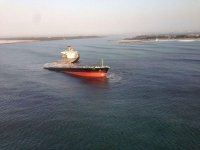
YUP... Happened a few months ago, 'they' are still trying to remove/slavage it.
https://www.youtube.com/watch?v=MkztfFrWwtc
... Is that a wreck in the pic?
YUP... Happened a few months ago, 'they' are still trying to remove/slavage it.
https://www.youtube.com/watch?v=MkztfFrWwtc
Attachments

zulu-X-treme
Sealiner
Mishfan wrote:
YUP... Happened a few months ago, 'they' are still trying to remove/salvage it.
https://www.youtube.com/watch?v=MkztfFrWwtc
... Is that a wreck in the pic?
YUP... Happened a few months ago, 'they' are still trying to remove/salvage it.
https://www.youtube.com/watch?v=MkztfFrWwtc