***Galjoen***
Sealiner
Ok, I've been asked by Oom Simen & Marthin to put up a post on how to safely practise catch & release and will try my best to explain and educate this topic as far as possible, please feel free to add any comments that I've missed in this regard or anything you think should be part of this topic.
Right, where to start, first of all if you want to release a fish you as fisherman must first make up your mind if you really want to release a size fish or not. I'm not even going to speak about under size fish as they all should be released safely back into the water in other words this topic WILL sooner or later be applicable to each and every one of us as somewhere along the line you''ll catch a under size fish that must be released. Most of you may know this already so please bear with me.
Ok, so you've decided to practise some catch & release and this is the steps you should follow when releasing a fish.
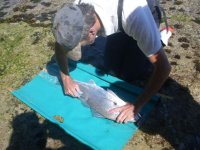
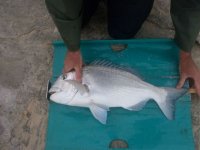
1. Make sure to have a weigh mat and clean cloth at hand, if you don't have a weigh mat you can use a clean wet cloth big enough (towel)to cover the fish.
2. When you fish of rocks or black mussel beds make sure not to drag the fish over the rocks or mussel beds as this could inflict some serious damage to the fish.
3. We usually fish with a partner that can help with the landing process, by using the weight mat or wet cloth to pick up the fish and carry to safety especially if it's a big fish...remember to wet the weigh mat before you "land" the fish on it so that it won't cause any damage to the protective "slime" layer that is on the fish's body.
4. Make sure the fish lies still on the weigh mat before removing the hook and cover it's eyes with a wet cloth when exposed to direct sunlight.
5. When removing the hook try to do this with caution as the fish could suddenly jump and you might hook yourself in the process.
6. If the fish has swallowed the hook, DON'T try to take it out, if you still want to release the fish then snip the line off as close to the hook as possible, if it's not a stainless steel hook it will rust out quickly. You will just hurt the fish even more if you want to try and get the hook out.
7. If you really want to actively practise catch & release then you should try and fish with barb-less hooks or circles. Circles will most likely hook the fish in the corner of the mouth 99% of the time which is very easy to remove with minimum damage to the fish.
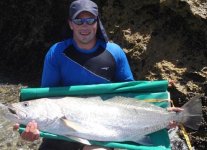
8. After the hook is removed, you can now tag the fish if you have a tagging kit. If you want to pose with the fish for a quick pic, just make sure your hands are wet or you can use the weigh mat to "hold" the fish while posing for a pic....always nice to have a pic of a nice size fish that you have released. Remember to never ever pic up the fish by it gills as this will cause serious damaged to the fish.
9. Carry the fish safely in the weigh mat to the water for the release and make sure it does not slip out and falls on the rocks or mussel beds.
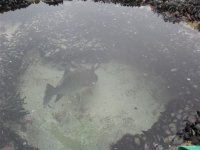
10. Any fish that you want to release must first be revived for a few minutes. Don't just throw it back in the water that's why it's always good to put your fish in a pool of water so that it can fully recover and gain it's strength back. If there's no pool available the walk knee deep in the water and revive the fish.
11. Very important, time is at essence here, be quick when you go about the tagging procedure and remember to take down the measurements of the fish. Snap a quick pic if you must and let it go.
12. Always keep your tagging kit/weight mat ready as there's no time to waste by still going to "search" for the stuff in your vehicle.