
You are using an out of date browser. It may not display this or other websites correctly.
You should upgrade or use an alternative browser.
You should upgrade or use an alternative browser.
have any of you used t line what is y
- Thread starter deenamoodley
- Start date

A Magazine lab yes, but this is the product that they say is the best and is all that they use. Yet they still say that it is not as strong as many of the other lines.
I work with labs, it is my job, I do not know of a global standard for testing fishing line (that does not mean that there is not one). If there is not a standard each manufacturer will ask a lab to test their line (and the competitors) in a manner that suits them.
At the end of the day if you take the line out of the lab and down to the sea and it is used by many anglers it will make or break a reputation.
KFGA is very popular, Double X is popular, Suffix, Siglon not as popular but good line. It goes down to choice and what the anglers that use the product trust and like.
I use 90% KFGA, I like and trust it.
I have used T Line found it great line.
I have used Double X, good, strong line but it floats, make your line feel the water effect on it, because of that I will not buy it. Does not mean that it is a bad line, caught my PB kob (34kg) using it.
I work with labs, it is my job, I do not know of a global standard for testing fishing line (that does not mean that there is not one). If there is not a standard each manufacturer will ask a lab to test their line (and the competitors) in a manner that suits them.
At the end of the day if you take the line out of the lab and down to the sea and it is used by many anglers it will make or break a reputation.
KFGA is very popular, Double X is popular, Suffix, Siglon not as popular but good line. It goes down to choice and what the anglers that use the product trust and like.
I use 90% KFGA, I like and trust it.
I have used T Line found it great line.
I have used Double X, good, strong line but it floats, make your line feel the water effect on it, because of that I will not buy it. Does not mean that it is a bad line, caught my PB kob (34kg) using it.

[align=right]
1. Test room conditions[/align]
The standard conditions are:
- Temperature: 18 ± 2°C [/*]
- Relative humidity: 65 ± 2°C
[/*]
2. Breaking strength and elongation at break
The breaking strength is the force that leads to the rupture of the thread or yarn. The corresponding value is Newton (N).
The elongation at break is the increase in length produced by stretching a test specimen to the breaking point expressed as a percentage of the initial length. The test is carried out on a dynamometer with a constant increase in elongation according to the following conditions:
- Length between clamps 500mm [/*]
- Test velocity; if elongation at break:
0.08 - 0.50mm 500mm/minute
> 0.50mm 1000mm/minute [/*]
- Pre tension: 2cN/tex
3. Tenacity (yarn count tenacity)
This is calculated from the breaking strength and yarn count and is expressed in centinewton per tex (cN/tex)
Tenacity (cN/tex) =
breaking strength (N)
Yarn count (dtex) x 0.001
4. Load at specified elongation (LASE)
This is the load resulting from a defined extension (usually at 2 % and 5%).
5. Hot air shrinkage
This is the shrinkage in length in percent caused by treatment with hot air. We distinguish between free shrinkage and shrinkage under pre-tension.
- Free shrinkage (Corresponds to the shrinkage curve)
This value defines the change of length after the influence of heat.
Method: After the measurement of length (L[suB]1[/suB]) under 2 cN/tex pre-tension at the defined temperature (between 100-200°C) during 15 minutes. After a cooling time of 1 hour under standard atmospheric conditions the shrunken length (L[suB]2[/suB]) will be determined again with 2 cN/tex pre-tension. The residual shrinkage is then calculated according to the following formula:
(L[suB]1 [/suB]– L[suB]2[/suB]) x 100
L[suB]1[/suB]
[*]Shrinkage under pre-tension
This value defines the change of length during the influence of heat. [/*]
Method: The sample is introduced into the heating channel with a pre-tension of 0.1 cN/tex at 160°C. The shrinkage will be read in percent directly from a scale.
6. Boiling water shrinkage
This is the shrinkage in length in percent which is caused by boiling water. It is calculated as follows:
Diameters up to 0.30mm:
- On a standard reel skeins of 1m circumference and 5000 dtex approx. are prepared and measured at a pre-tension of 2 cN/tex lengthwise (L[suB]1[/suB]).
Diameters from 0.31mm:
- A single end of 1m length is measured a at pre-tension of 2 cN/tex. [/*]
- The skeins are the single yarn resp. are then treated without tension during 30 minutes in boiling water (98°C), dried and conditioned at standard conditions. [/*]
- The shrinked length (L[suB]2[/suB]) is determined again with 2 cN/tex pretension. [/*]
- The boiling water shrinkage in percent is calculated according to the following formula: [/*]
- Boiling water shrinkage
(L[suB]1 [/suB]– L[suB]2[/suB]) x 100
L[suB]1[/suB]
7. Yarn count
The yarn count decitex (dtex) corresponds to the yarn weight in grams of 10,000m length. In order to determine the yarn count, a skein is wound on a standard reel under a pre-tension of 2 cN/tex. The determined yarn length is then weighed on an analytical scale.
PA
PET
Skein length
[align=center]Diameter[/align]
<15/100
<10/100
100m
18/100
11/100-16/100
10,
>20/100
>17/100
5 x 1m
8. Abrasion Testing
Very important to many of our customers is our ability to test the abrasion resistance of our own and customers products. We usually use a diameter of 0.28mm for comparison.

@ hooked
Deena asked have anyone used this line and what was your opinion on the SA manufactured line?
So i take it you are not happy with this line.
I am sure Deena would be happy with just that answer as i believe he was looking at our answers and opinions in a nutshell not with all the techs behind it.
Anyone else have any yes no answers as i am also interested in looking at it and would also like some short and sweet answers.
Deena asked have anyone used this line and what was your opinion on the SA manufactured line?
So i take it you are not happy with this line.
I am sure Deena would be happy with just that answer as i believe he was looking at our answers and opinions in a nutshell not with all the techs behind it.
Anyone else have any yes no answers as i am also interested in looking at it and would also like some short and sweet answers.

[color=#006600]khan[/color] wrote:
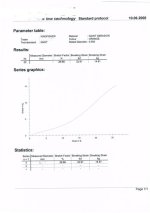
Why would you want my opinion?You have a test sheet right in front of you.Look at the knot strength and look at the linear strength.Compare it to the KF graphs posted up aswell and draw your own conclusions.I am all out of spoons at the moment so your gonna have to feed yourself.
If you listen to opinions you will never get to a conclusion.50 guys 50 opinions.Who do you trust?
@ hooked
Deena asked have anyone used this line and what was your opinion on the SA manufactured line?
So i take it you are not happy with this line.
I am sure Deena would be happy with just that answer as i believe he was looking at our answers and opinions in a nutshell not with all the techs behind it.
Anyone else have any yes no answers as i am also interested in looking at it and would also like some short and sweet answers.
Why would you want my opinion?You have a test sheet right in front of you.Look at the knot strength and look at the linear strength.Compare it to the KF graphs posted up aswell and draw your own conclusions.I am all out of spoons at the moment so your gonna have to feed yourself.
If you listen to opinions you will never get to a conclusion.50 guys 50 opinions.Who do you trust?
@Hooked
Thank you that is a new thing I learned to day.
Now we need to get someone to pay a lab to test ALL the lines at the same time. Then we can decide which is really the best.
I did not see is there a section on UV effect, also salt effect on the line?
Also need to look at knot strength of each line.
Thank you that is a new thing I learned to day.
Now we need to get someone to pay a lab to test ALL the lines at the same time. Then we can decide which is really the best.
I did not see is there a section on UV effect, also salt effect on the line?
Also need to look at knot strength of each line.
There are a few guys using it who have been supplied by me.Good reports comming back from some peeps , lukewarm respose from others.the F1 line seems to be bullet proof.I have been told and have experienced for myself that its is stronger than some 0,8mm shock leaders that are sold out here.When pulling for the break after getting stuck on the bottom I have snapped my shock leader knot at the sinker.I have heard this story from another angler aswell who had the same situation.I love it for the knot strength.A fig 8 is all that is needed to join a leader on......
[color=#006600]Ziyz[/color] wrote:
Quite simple , there is no right or wrong answer.Lines are mostly a compromise between all the factors you listed above.Sacrafice castability and you gain strength and abrasion resistance.Take maxima as an example.High abrasion , high linear and knot strength at the cost of castability.
I have a mono called Hard Core.Its unbelievably strong and you literally struggle to cut it with a knife.Unfortunatley its so hard and stiff I struggle to tie a knot in it.You need two pairs and two heavies to pull the knots down.
I suppose what I am trying to get at is that the line you use for fishing for kob on a sandy beach is going to need totally diffferent qualities to the line your gonna need to catch 80kg cow sharks off the bricks.Alot of it also comes down to the gear you are using.A fishing rod with a lot of flex in it will help with fighting fish whilst a very stiff rod will need a line with some stretch in it to help absorb sudden lunges.
I only use two lines these days.
Ultim F1 0,50 and Ultima Power Salt 0,37.I get it for free I admit but I dont think there is much else out there to compare with them.My 0,37 has a breaking strain of about 18kg and I have yet to break F1.If they werent available I would probably opt for Maxima in bigger sizes and KFGA in smaller sizes.
Not the anwser you wanted but hope it helps....
Hooked, Of all the lines that have been lab tested, which would be your order of preference for best knot strength, abrasion resistance, castability and low stretch?
Quite simple , there is no right or wrong answer.Lines are mostly a compromise between all the factors you listed above.Sacrafice castability and you gain strength and abrasion resistance.Take maxima as an example.High abrasion , high linear and knot strength at the cost of castability.
I have a mono called Hard Core.Its unbelievably strong and you literally struggle to cut it with a knife.Unfortunatley its so hard and stiff I struggle to tie a knot in it.You need two pairs and two heavies to pull the knots down.
I suppose what I am trying to get at is that the line you use for fishing for kob on a sandy beach is going to need totally diffferent qualities to the line your gonna need to catch 80kg cow sharks off the bricks.Alot of it also comes down to the gear you are using.A fishing rod with a lot of flex in it will help with fighting fish whilst a very stiff rod will need a line with some stretch in it to help absorb sudden lunges.
I only use two lines these days.
Ultim F1 0,50 and Ultima Power Salt 0,37.I get it for free I admit but I dont think there is much else out there to compare with them.My 0,37 has a breaking strain of about 18kg and I have yet to break F1.If they werent available I would probably opt for Maxima in bigger sizes and KFGA in smaller sizes.
Not the anwser you wanted but hope it helps....
One other thing ( this is gonna upset peeps ) there is no such thing as a 100% knot.There are fishing lines that have between 90-100% knot strength which can achieve much higher knot strength with something like a bimmini or what have you but a line that has a low knot strength to begin with will never achieve a 100% knot.

Marthin
Sealiner
hooked very informative....
I use the 15kg techniperlon camo for beach and the 0.47 double X high abrasion for multipurpose....
The techniperlon is very soft and has a thinner diametre for higher breaking strain, but with poor knot strength.
I have just changed my knots to suit the line...
I use the 15kg techniperlon camo for beach and the 0.47 double X high abrasion for multipurpose....
The techniperlon is very soft and has a thinner diametre for higher breaking strain, but with poor knot strength.
I have just changed my knots to suit the line...