I posted this trip report on a fly fishing website last year, but thought some of you guys would like to read it too. Apologies to those that are members on both sites and have seen this before:
[align=center]Kavango River Tiger Fishing Safari
[/align]
Well after a year of planning, tying flies, and researching tackle traces etc for tiger fish, the day finally came for Tim Pope Ellis, His wife Janet, his Brother Dave and myself to pack the trailer and head north to the Kavango river on the border of Namibia and Angola. A 2 day trip lay ahead of us so news of heavy rains in the Olifants river valley was not encouraging as we thought we may have to find an alternative route up north, but luckily a quick call to the AA ensured us that the N7 was open all the way to Vioolsdrif so nothing stood in our way. We hit the road at 02h30 so were unable to see the devastation caused by the river. By 10h00 we were at the border and the orange looked to have nice flows for fishing for yellows. I remember thinking something along the lines of it being sacrilege to cross the orange without stopping to have a chuck at the small mouth yellows there. Anyways we carried on to Windhoek and spent the night there with Pete and Liz Kibble, family friends of Tim and the parents of our fishing guide for the next week, Kevin Kibble.
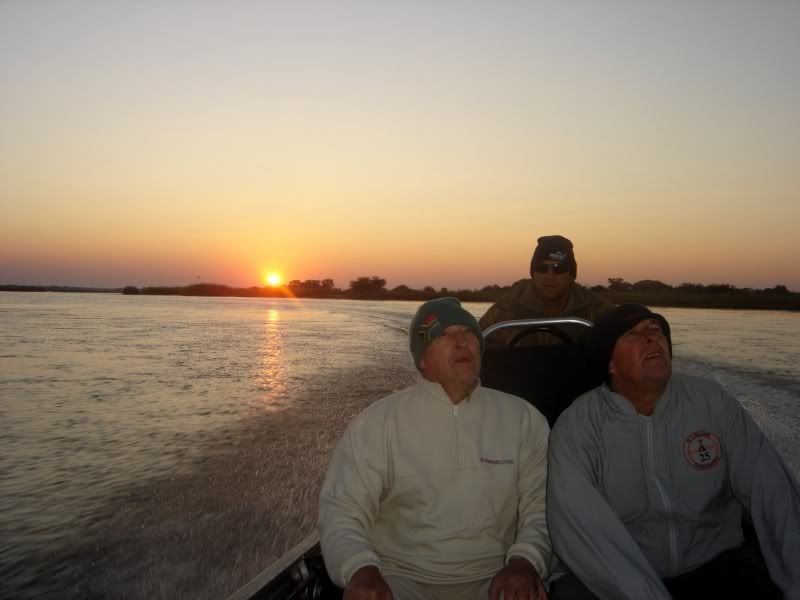
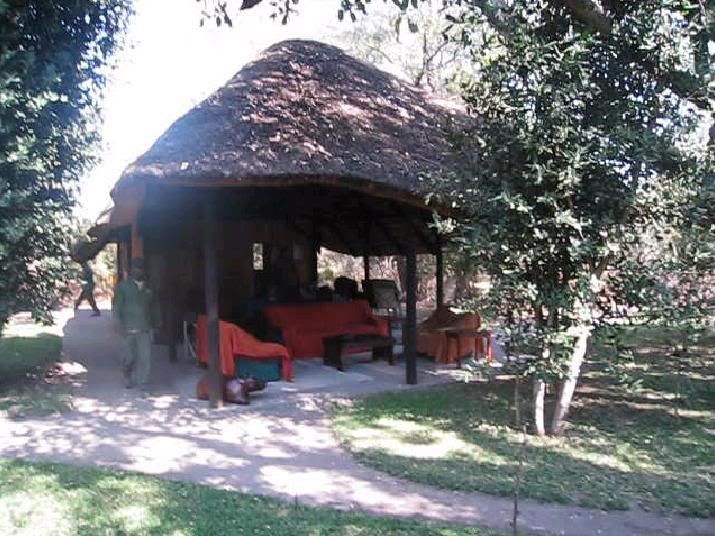
The next day we traveled from Windhoek to Rundu on the Angola border and then west for about 100km where we transferred to boats for the last 5 or so kilometres of the trip to Kevin’s fishing camp on the banks of the river. At times it is possible to drive (with 4x4) all the way to the camp but the flood plains were still a bit wet at this time of year so the final leg had to be by boat, and i must say I wouldn’t have had it any other way. Pete had joined us from Windhoek and he would skipper the second boat for our fishing for the week. We arrived at the river as the sun was going down, packed the boats and hit the water, eventually reaching camp by the moonlight where Kevin’s friendly staff welcomed us and unloaded the boats for us. Kevin has built his camp in a group of trees on a small side channel of the Kavango river and it is a simply stunning place. The accommodation is tents on elevated wood frame bases with a shower and toilet built onto the back and the main communal area of the camp is an open sided thatch roofed area with couches, dinner table, bar and kitchen.
Some pics of the camp:
The main camp area:
Front of our room
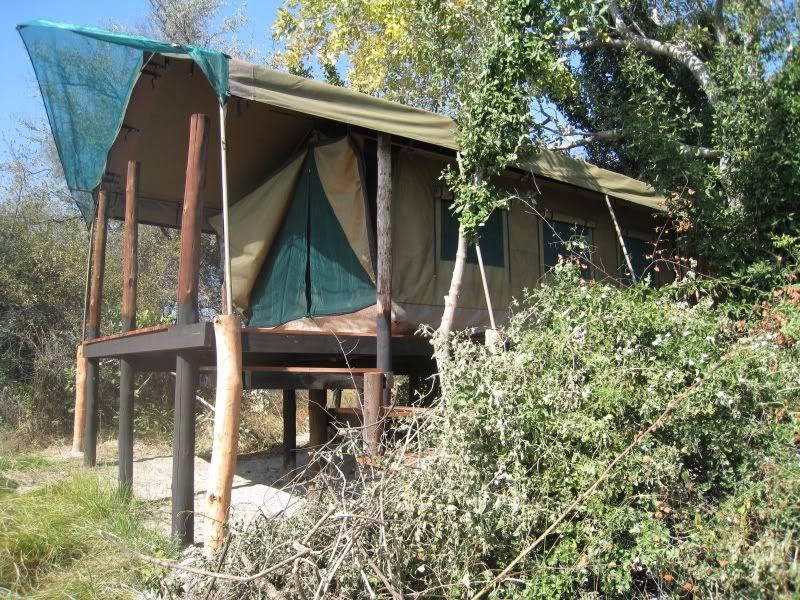
Rear of our room
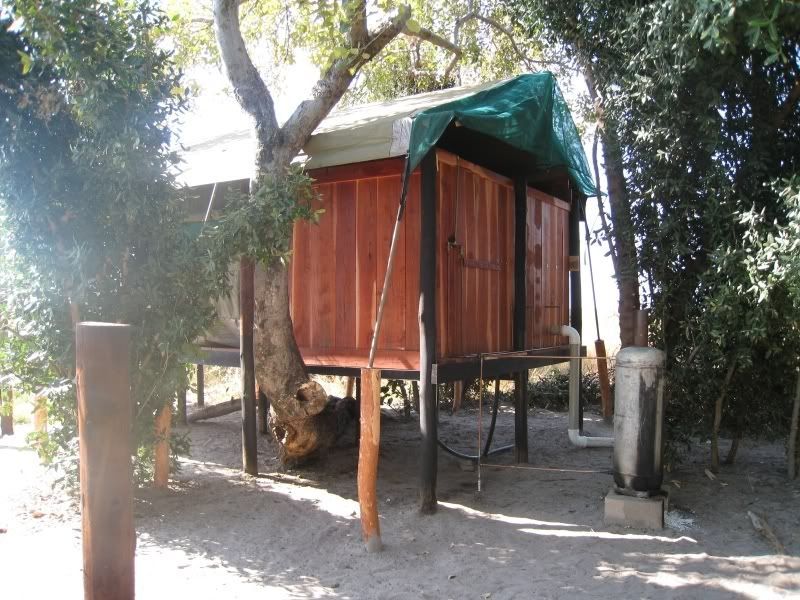
We had a quick dinner and then Kevin and Pete were hit with a barrage of questions on what traces, flies, leader setups etc would be ideal for the current conditions, and then we tackled up accordingly before getting to bed early.
We woke up early on day 1 and had a quick breakfast before loading the boats with all the required tackle. Tim and Dave loaded their gear onto the larger boat with Kevin as their guide and I loaded mine onto the smaller boat with Pete as my guide.
These are the two boats we used for fishing:
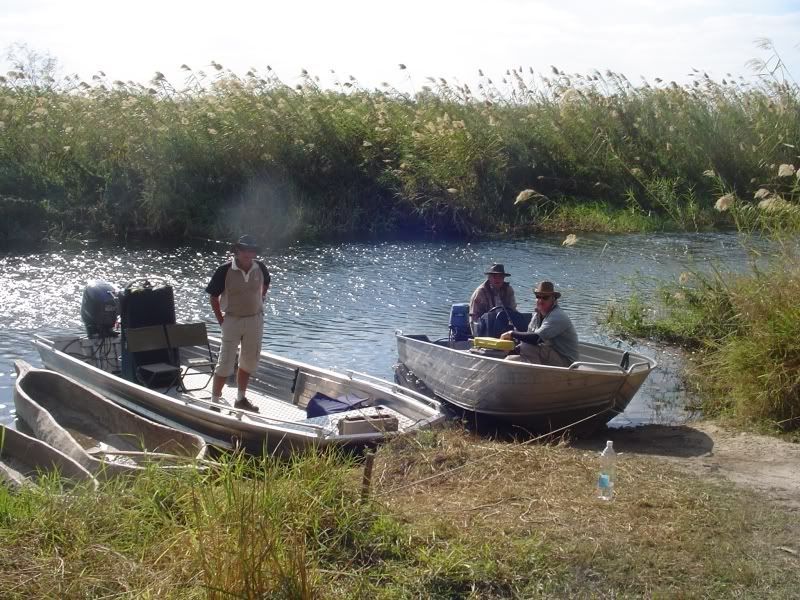
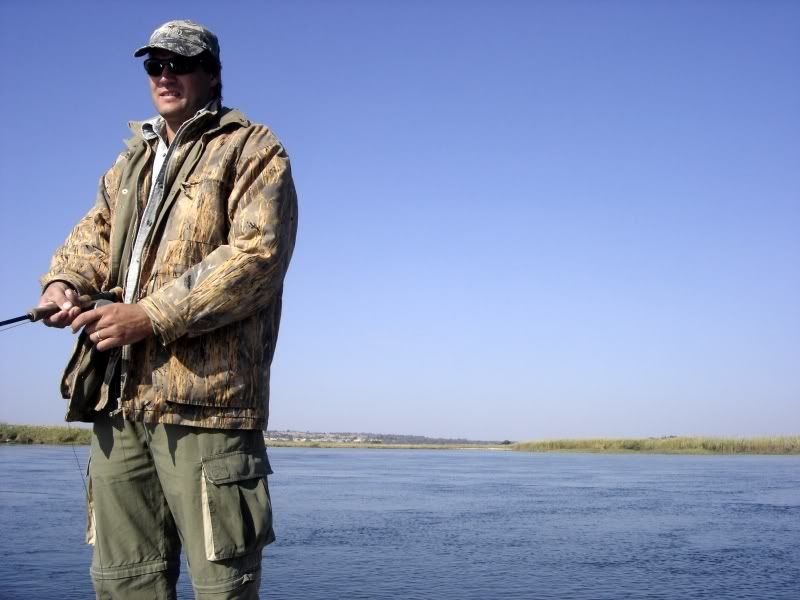
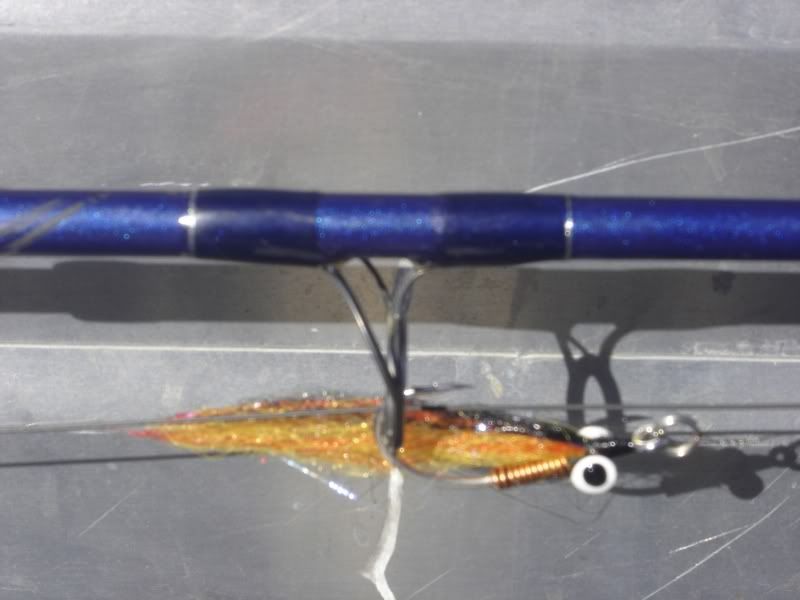
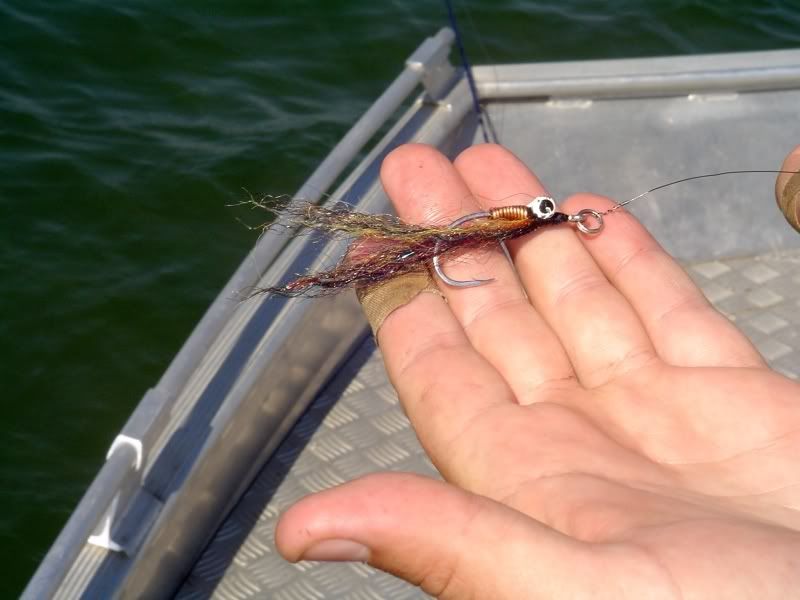
We drove upstream to some spots that Pete and Kevin knew to produce well in the past. The water temperature was apparently slightly lower than ideal and in Kevin’s experience this put the fish right on the bottom so we were to let the Di7 lines sink for a good while before retrieving. We started off in some slower pools and back eddies and fished with the boats drifting rather than anchored. Kevin had chosen an Orange and Black Clouser with copper body from my fly box and that was the one that I started with.
It did not take long before Pete had got me into a fish. Out of habit I was counting the line down before retrieving and after a count of about 15 seconds I started a medium paced erratic retrieve with lots of darts and pauses as instructed and then I got smoked! The fish hit me on the run and before I knew what was happening the fly line was flying through the guides. I tried to organise the line on the floor but the anchor rope got in the way and the tension on the line snapped the fish off. Seconds later the fish jumped to free the fly still in his mouth, and Pete commented that it was probably in the 3-4lb range. Well from all that I had heard about the speed of these fish i could not believe what I had just experienced. Not being much of a saltwater fisherman I cannot equate it to fish of the sea, but it was a damn site faster than anything i had encountered in fresh water. The blood was pumping and i now realised that these fish demanded a lot more respect than i had been giving them and obstructions on the deck of the boat had to be watched for at all times. I was encouraged by the time it had taken to get interest from the fish. I tied on another Orange and black clouser and a short while later I got another big hit like something was trying to rip the rod out my hand. I struck with the rod and the fish was gone! I brought the line in and realised that I had been smashed up on the take again. Pete asked what knot I was attaching my leader to trace with and i showed him. I was using a simple improved clinch knot, and he suggested that it was not going to hold up and i would keep getting smashed up and taught me a knot using a loop that they had found to give much better success as the double line of the loop means that if one snaps, you are still attached to the trace. I got another couple of hits in the morning but could not convert those into hook ups. We finished fishing at about 12h30 and headed back to camp for some lunch. Dave had had more success on the other boat fishing with rapalas and had two tigers of about 6-7lbs as well as a large nembwe to his name, but Tim, like me, had also not had success on fly. We had some lunch and rested up before heading back out at about 15h00 for the evening session. This time Pete and I went downstream and did some drift fishing, where we would drift in the faster currents and cast out sideway, drifting with the di7 line as it sunk. I was getting plenty of hits from what seemed to be tiger fish but again nothing was sticking. I finally got a hook up and again the thing sped onto the reel and I thought I might just have him this time, but the fish jumped and spat the hook. Pete kept saying to me that I have to hit the fish harder by strip striking but I was just not getting it right. Every time I would hook a fish he would encourage me to strip strike harder. Anyway by the end of the day I had not landed a fish but had learned a lot. Tim also had no success on fly but managed a Nembwe on spinner in the afternoon session so it was only me on a blank after day one. I realised that unlike trout, the skill in getting these fish onto the boat is not getting them to take the fly (generally speaking), but rather how you deal with them once you have the fly in their mouth. The challenge had been laid down by these fish and they were beating me for sure. With the improved knots i was using i was not being snapped off any more so i felt as if I was winning the battle slowly. Kevin and Pete emphasised over dinner the ideas of strip striking them as hard as you can and then giving them absolutely no slack thereafter. After dinner we tied a few more flies, had a couple of beers around the fire and hit the sack, ready for day 2.
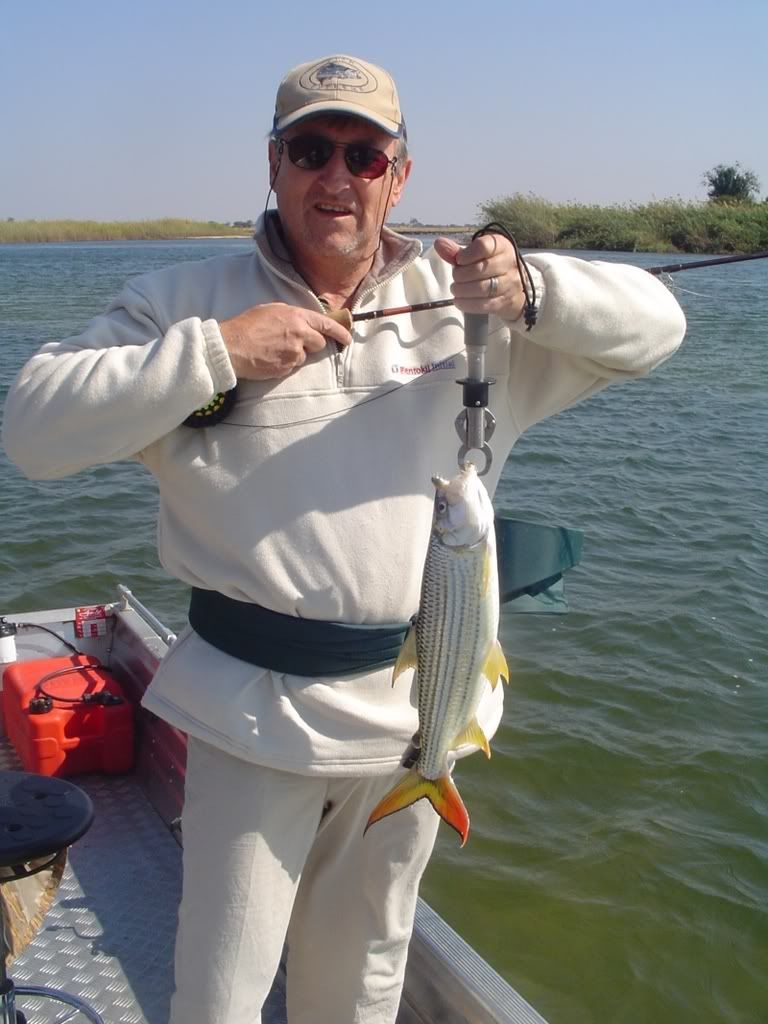
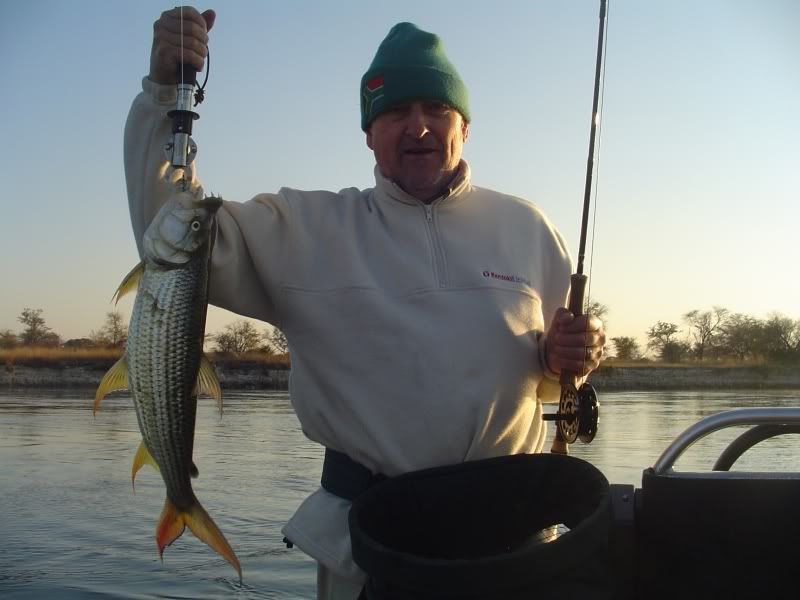
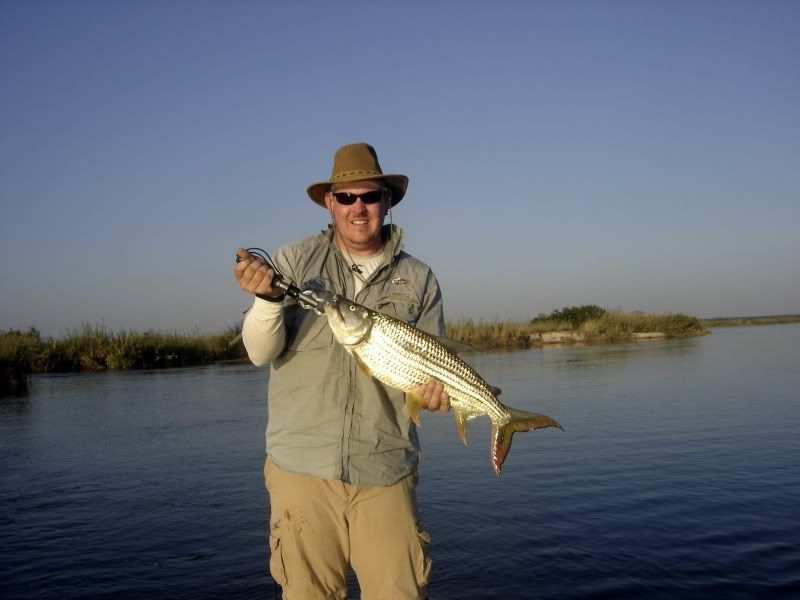
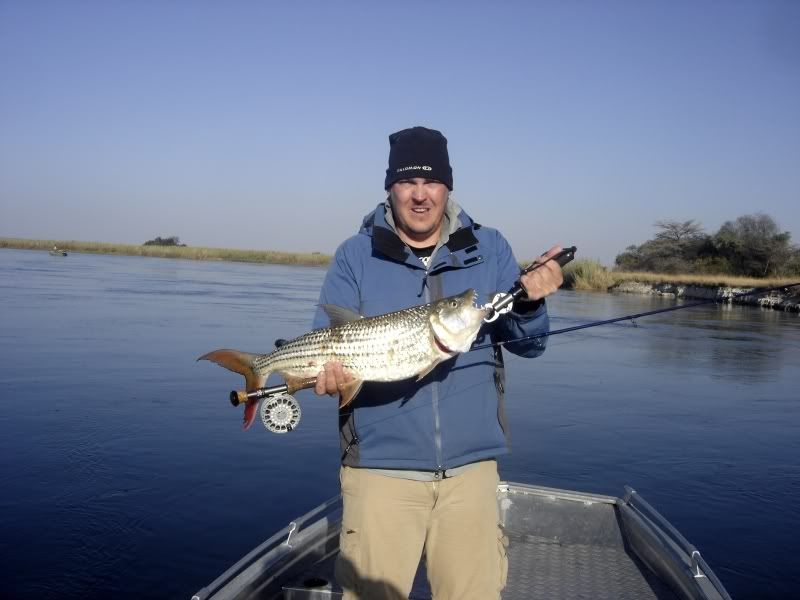
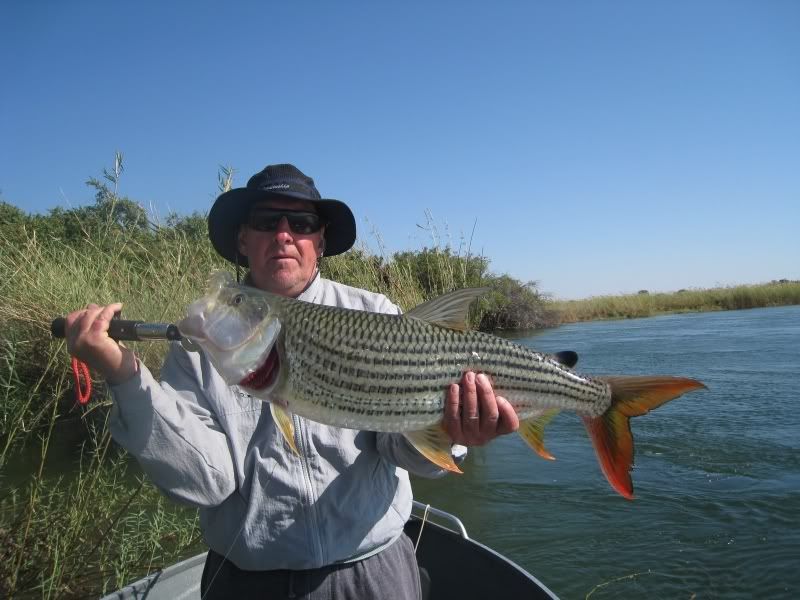
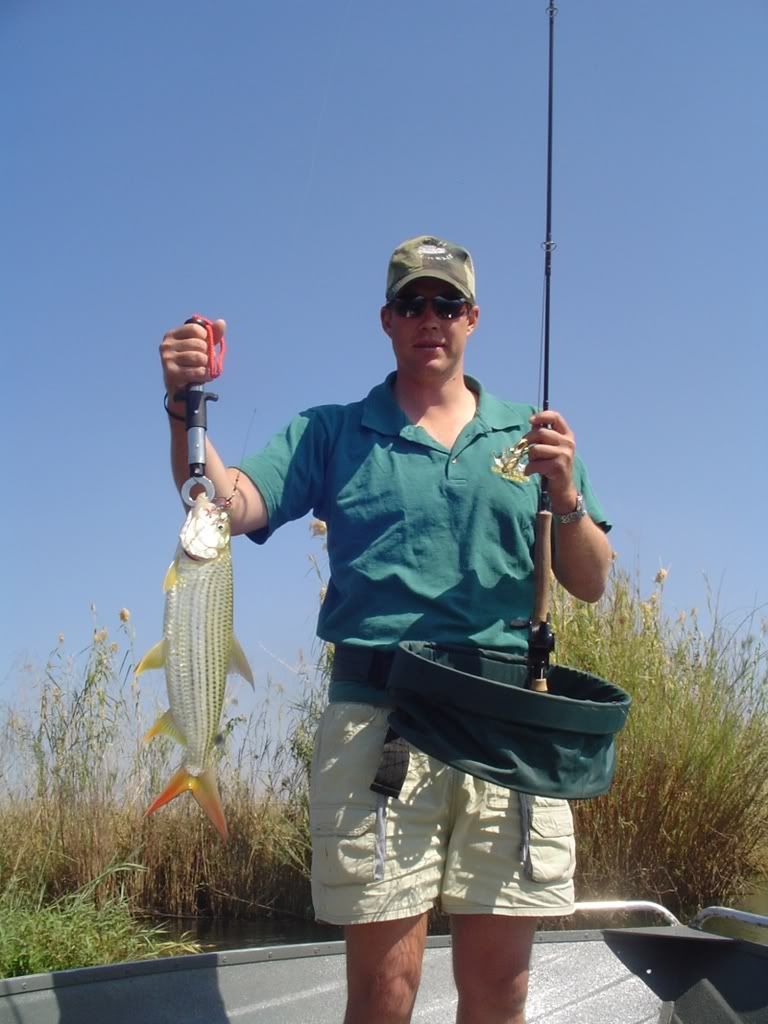
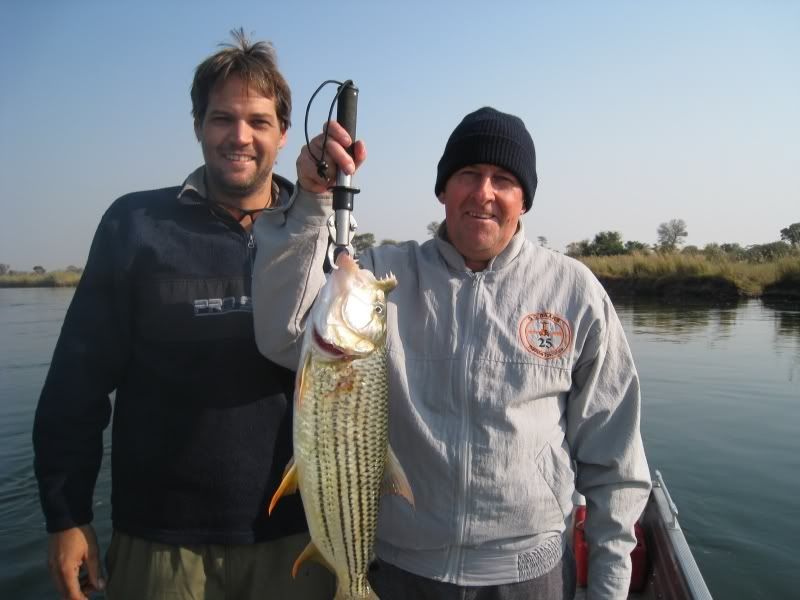
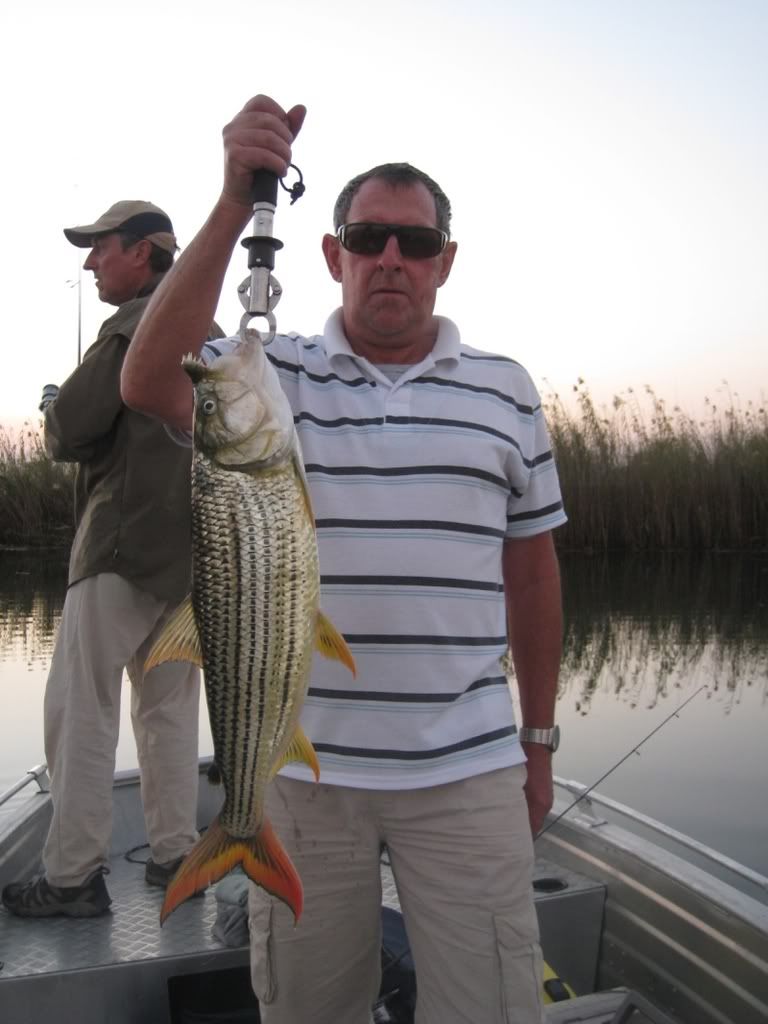
Dave with our Guide Kevin and a tiger of about 6lbs
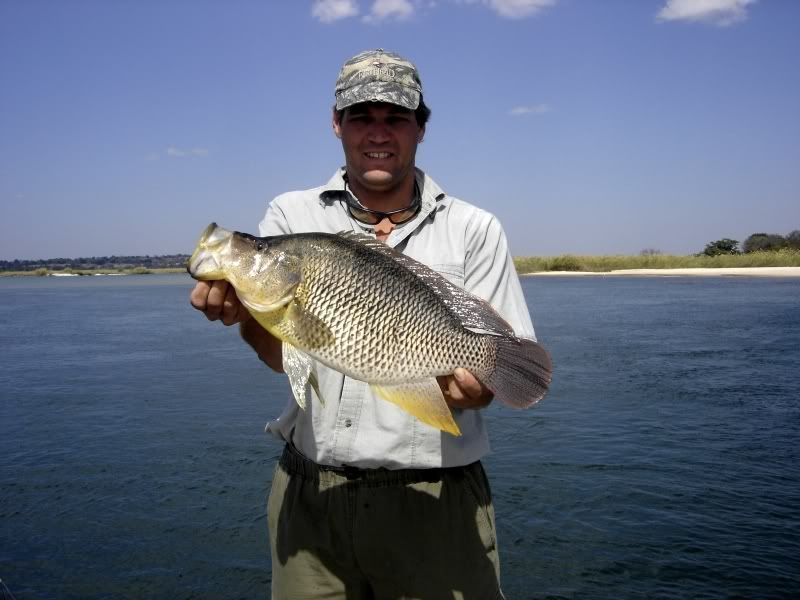
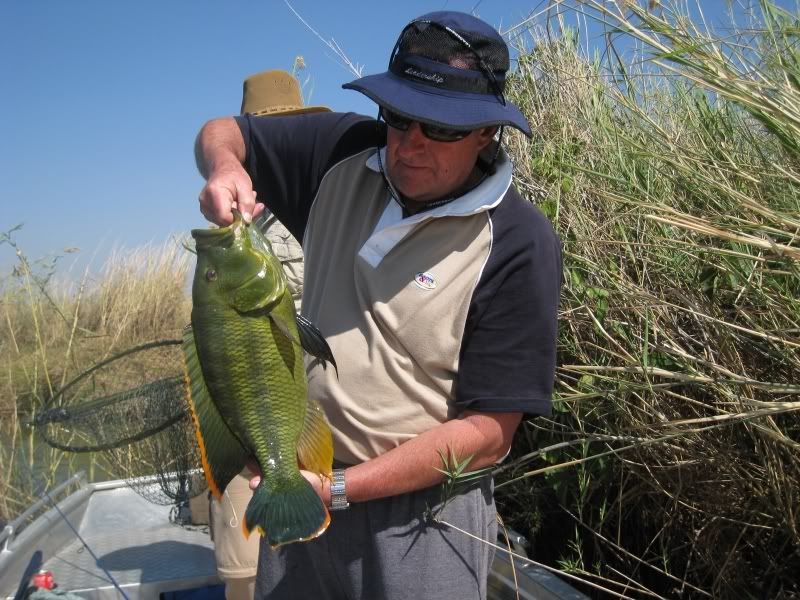
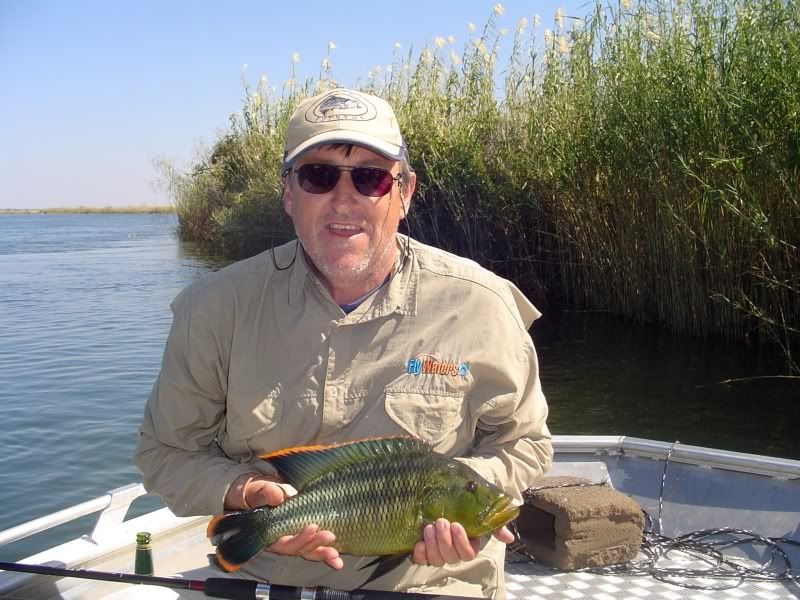
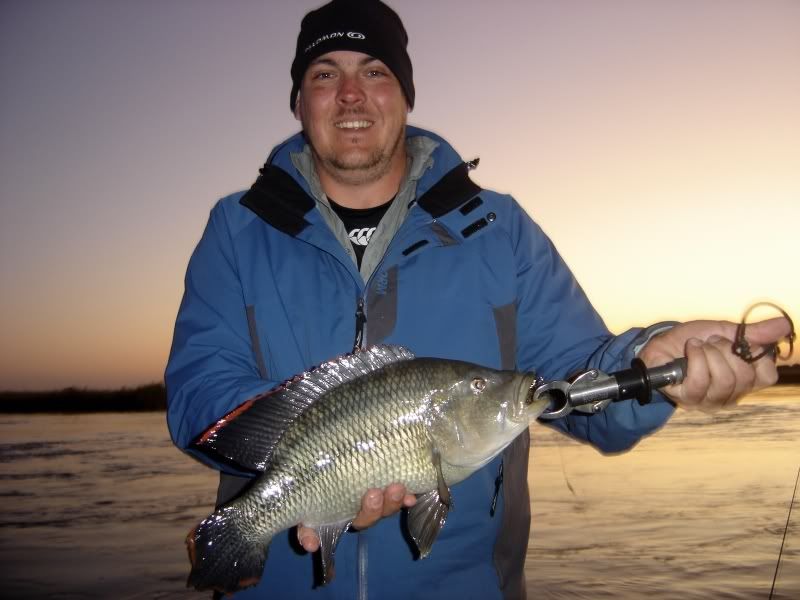
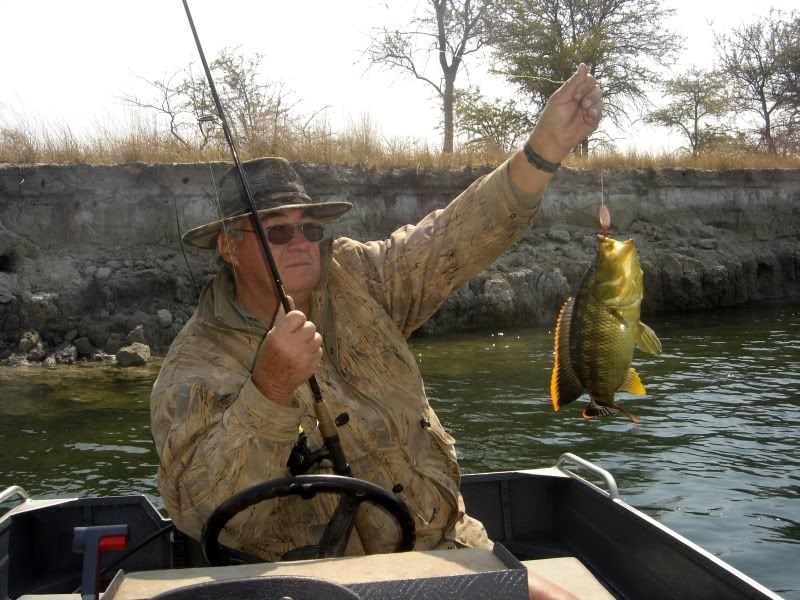
Pete with a small Nembwe (Note the water clarity in the background)
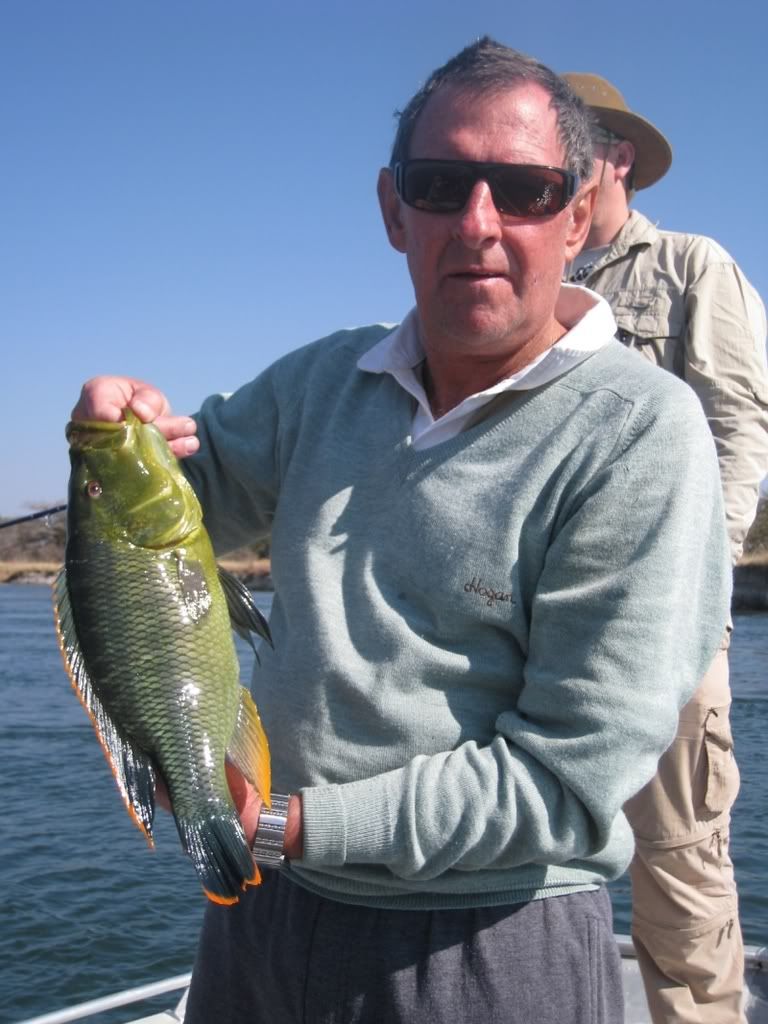
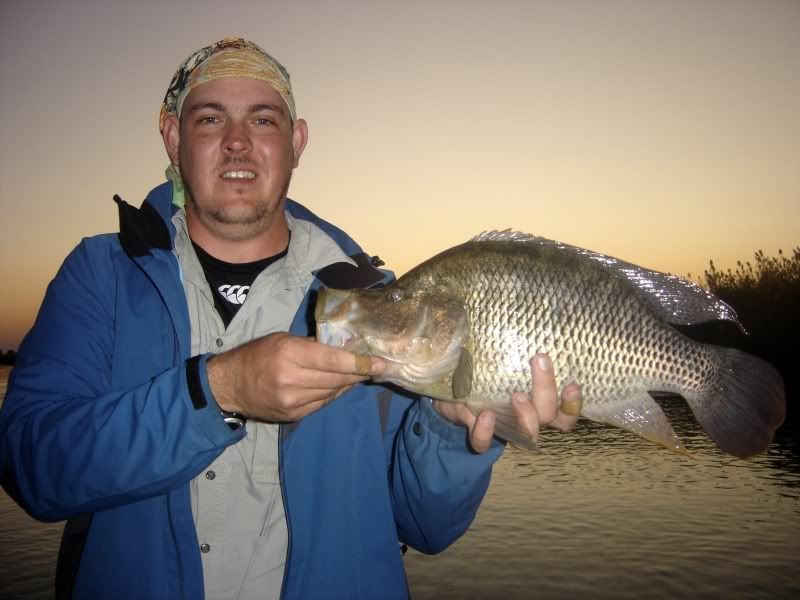
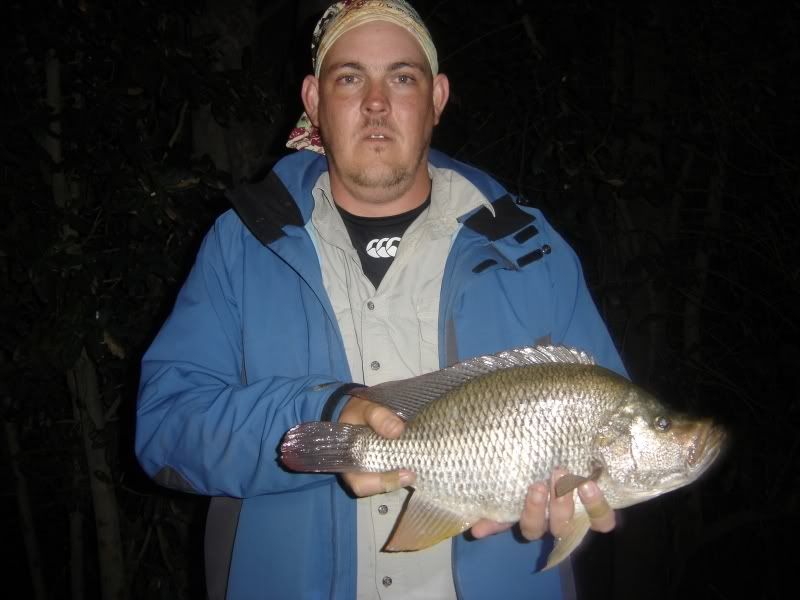
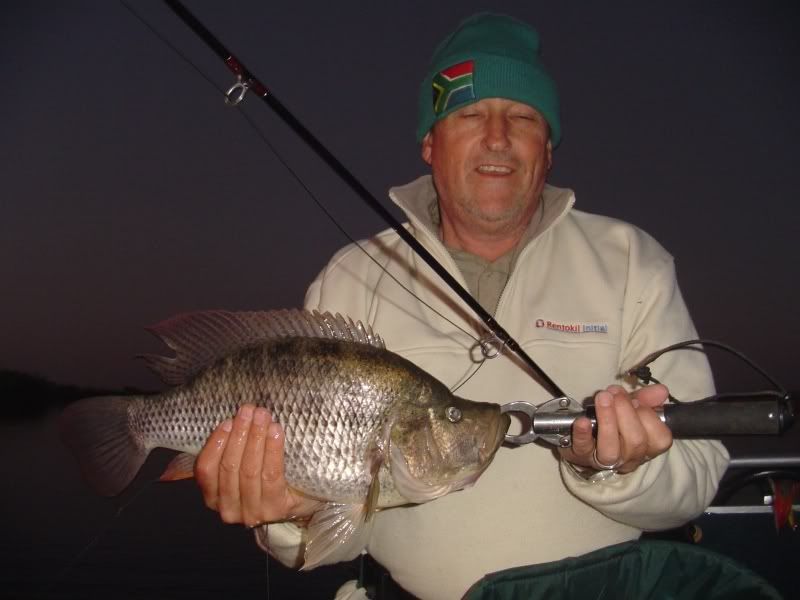
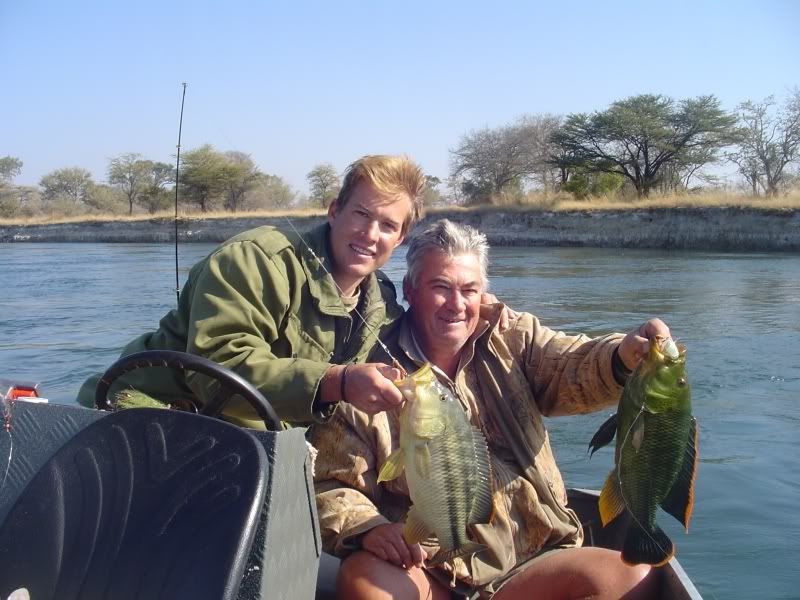
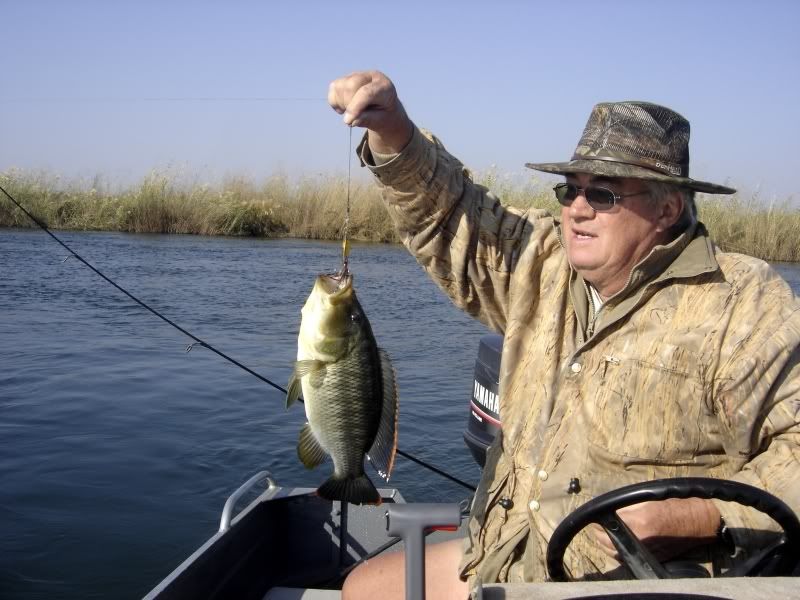
Pete with a small Brownspot Bream - similar to the Nembwe.
Dave with another tiger of about 6lb
[align=center]Kavango River Tiger Fishing Safari
[/align]
Well after a year of planning, tying flies, and researching tackle traces etc for tiger fish, the day finally came for Tim Pope Ellis, His wife Janet, his Brother Dave and myself to pack the trailer and head north to the Kavango river on the border of Namibia and Angola. A 2 day trip lay ahead of us so news of heavy rains in the Olifants river valley was not encouraging as we thought we may have to find an alternative route up north, but luckily a quick call to the AA ensured us that the N7 was open all the way to Vioolsdrif so nothing stood in our way. We hit the road at 02h30 so were unable to see the devastation caused by the river. By 10h00 we were at the border and the orange looked to have nice flows for fishing for yellows. I remember thinking something along the lines of it being sacrilege to cross the orange without stopping to have a chuck at the small mouth yellows there. Anyways we carried on to Windhoek and spent the night there with Pete and Liz Kibble, family friends of Tim and the parents of our fishing guide for the next week, Kevin Kibble.
The next day we traveled from Windhoek to Rundu on the Angola border and then west for about 100km where we transferred to boats for the last 5 or so kilometres of the trip to Kevin’s fishing camp on the banks of the river. At times it is possible to drive (with 4x4) all the way to the camp but the flood plains were still a bit wet at this time of year so the final leg had to be by boat, and i must say I wouldn’t have had it any other way. Pete had joined us from Windhoek and he would skipper the second boat for our fishing for the week. We arrived at the river as the sun was going down, packed the boats and hit the water, eventually reaching camp by the moonlight where Kevin’s friendly staff welcomed us and unloaded the boats for us. Kevin has built his camp in a group of trees on a small side channel of the Kavango river and it is a simply stunning place. The accommodation is tents on elevated wood frame bases with a shower and toilet built onto the back and the main communal area of the camp is an open sided thatch roofed area with couches, dinner table, bar and kitchen.
Some pics of the camp:
The main camp area:
Front of our room
Rear of our room
We had a quick dinner and then Kevin and Pete were hit with a barrage of questions on what traces, flies, leader setups etc would be ideal for the current conditions, and then we tackled up accordingly before getting to bed early.
We woke up early on day 1 and had a quick breakfast before loading the boats with all the required tackle. Tim and Dave loaded their gear onto the larger boat with Kevin as their guide and I loaded mine onto the smaller boat with Pete as my guide.
These are the two boats we used for fishing:
We drove upstream to some spots that Pete and Kevin knew to produce well in the past. The water temperature was apparently slightly lower than ideal and in Kevin’s experience this put the fish right on the bottom so we were to let the Di7 lines sink for a good while before retrieving. We started off in some slower pools and back eddies and fished with the boats drifting rather than anchored. Kevin had chosen an Orange and Black Clouser with copper body from my fly box and that was the one that I started with.
It did not take long before Pete had got me into a fish. Out of habit I was counting the line down before retrieving and after a count of about 15 seconds I started a medium paced erratic retrieve with lots of darts and pauses as instructed and then I got smoked! The fish hit me on the run and before I knew what was happening the fly line was flying through the guides. I tried to organise the line on the floor but the anchor rope got in the way and the tension on the line snapped the fish off. Seconds later the fish jumped to free the fly still in his mouth, and Pete commented that it was probably in the 3-4lb range. Well from all that I had heard about the speed of these fish i could not believe what I had just experienced. Not being much of a saltwater fisherman I cannot equate it to fish of the sea, but it was a damn site faster than anything i had encountered in fresh water. The blood was pumping and i now realised that these fish demanded a lot more respect than i had been giving them and obstructions on the deck of the boat had to be watched for at all times. I was encouraged by the time it had taken to get interest from the fish. I tied on another Orange and black clouser and a short while later I got another big hit like something was trying to rip the rod out my hand. I struck with the rod and the fish was gone! I brought the line in and realised that I had been smashed up on the take again. Pete asked what knot I was attaching my leader to trace with and i showed him. I was using a simple improved clinch knot, and he suggested that it was not going to hold up and i would keep getting smashed up and taught me a knot using a loop that they had found to give much better success as the double line of the loop means that if one snaps, you are still attached to the trace. I got another couple of hits in the morning but could not convert those into hook ups. We finished fishing at about 12h30 and headed back to camp for some lunch. Dave had had more success on the other boat fishing with rapalas and had two tigers of about 6-7lbs as well as a large nembwe to his name, but Tim, like me, had also not had success on fly. We had some lunch and rested up before heading back out at about 15h00 for the evening session. This time Pete and I went downstream and did some drift fishing, where we would drift in the faster currents and cast out sideway, drifting with the di7 line as it sunk. I was getting plenty of hits from what seemed to be tiger fish but again nothing was sticking. I finally got a hook up and again the thing sped onto the reel and I thought I might just have him this time, but the fish jumped and spat the hook. Pete kept saying to me that I have to hit the fish harder by strip striking but I was just not getting it right. Every time I would hook a fish he would encourage me to strip strike harder. Anyway by the end of the day I had not landed a fish but had learned a lot. Tim also had no success on fly but managed a Nembwe on spinner in the afternoon session so it was only me on a blank after day one. I realised that unlike trout, the skill in getting these fish onto the boat is not getting them to take the fly (generally speaking), but rather how you deal with them once you have the fly in their mouth. The challenge had been laid down by these fish and they were beating me for sure. With the improved knots i was using i was not being snapped off any more so i felt as if I was winning the battle slowly. Kevin and Pete emphasised over dinner the ideas of strip striking them as hard as you can and then giving them absolutely no slack thereafter. After dinner we tied a few more flies, had a couple of beers around the fire and hit the sack, ready for day 2.
Dave with our Guide Kevin and a tiger of about 6lbs
Pete with a small Nembwe (Note the water clarity in the background)
Pete with a small Brownspot Bream - similar to the Nembwe.
Dave with another tiger of about 6lb