
I was really impressed by the ammount of work and dedication Hooch put into his cooler project. I thought about all the time and effort both he and I have put into projects. How do we learn things. By trial and error (My preferred Method), instruction and on advice of others. Working with Fibreglass or the mere suggestion of it leaves most mere mortals running for the hills screaming. Nobody wants to itch and get sticky resin all over themselves and still end up with an abortion on the work bench. In this thread I want to help those that are interested in the "Black Art" make their next experience with composites a lekker one. Terminolgy first. Fibreglass is glass manufactured like the normal stuff. Melted to a high viscosity liquid and in this case is forced through a die under high pressure. It comes out the other end of the syringe type needle as a very fine hair that is glass but because it's so thin it's flexible. From this all forms are made. The most common one is what most people are used to seeing, CSM or Chopped Strand Matte. General purpose stuff made in different weights and fibre lengths. Then there are woven fabrics in many different forms and weights from 40gr/M up to 600. The big misnomer is that fibreglass eats polyester. Fibreglass does not eat anything at all. It's glass, the same thing you drink your dop out of. The resin is what eats polystyrene. The resin in question is Polyester. The stuff that you find in hardware stores in little tins with a plastic bottle bottle of evil smelling hadener. General purpose stuff at huge cost because the middleman figured a way to buy a drum, decant it and charge more than the price of gold for 500ml. Polyester has it's pros and cons but for the purpose of this little tutorial all I can say in laymans terms is that this resin contains chemicals that break down and destroy Polystyrene. To save those of you much PT with all kinds of barrier coatings like PVA paint etc the anwer is to use Epoxy resin on your Polystyrene coolers. It is more expensive and mixing needs to be more accurate but you will use less than half the material for a lighter, stronger and way better looking finished product.
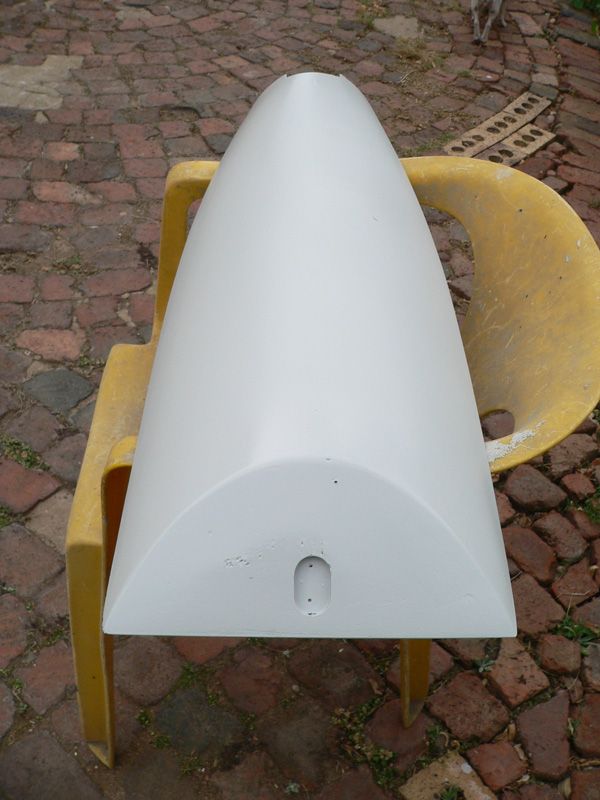
This is a photo of the Pattern/plug for the forward hatch I'm doing for my fishing ski. What I did was cut plywood sourced from a Harley Davidson crate to the desired shape and size. I made the ribs to fit and bonded them to the base with wood glue. Polystyrene blocks were then bonded into place with the same glue and preliminary shaping was done.

This is a photo of the Pattern/plug for the forward hatch I'm doing for my fishing ski. What I did was cut plywood sourced from a Harley Davidson crate to the desired shape and size. I made the ribs to fit and bonded them to the base with wood glue. Polystyrene blocks were then bonded into place with the same glue and preliminary shaping was done.


 on the Liefie story !!!