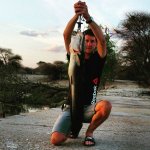
Barbel can be caught in either deeper water or shallow water(depending on time of day, water temp. etc.)
When the water is clean(as per your pictures) barbel will retreat to deeper water during the heat of the day and start coming out to the shallows as the day draws to an end. They will then seek out these places where food is abundant.
Most important is to look for structure and places where food and smaller fish will gather.
Structure being above or below water. Trees(dead or alive), reeds, rocks, drop offs, eddies etc.
Drop-offs, where faster flowing water washes over rocks into deeper water is always productive.
Eddies- where faster moving water enters slower(deeper) water, these can be identified by water normally slowly circling to either side(check for floating debris that starts turning on the surface) are also excellent spots as food washed down will gather here.
The big barbel in turn will be here to snack on these scraps as well as hunt the smaller fish that have the same idea.
Mudfish and bream if legal to use as live bait are excellent. Bear in mind that barbel are predatory fish and actively hunt live fish but will not hesitate to take dead bait.
Strike rate on live bait for big barbel will be much higher than on dead bait.
Use any heads, half or whole fish or fillets of fish that occur naturally in the river. Scale them before using them as this lets out more flavour and the cat will swallow the bait more readily.
I would not use the dipstick method unless you try just off the bridge or from a boat with crocs and hippos about.
You can also sight fish for them with a spinning rod. Attach a big float(top bung) to your trace and have a fillet about .5-1 m below that. As soon as you see a barbel surface to gulp air, cast directly at it or just ahead of it if you can determine the direction the barbel is going. Let your bait settle down. If no take give a short jerk or two-this normally entices a strike. If not repeat when another surfaces.
Good live bait rig method.