
You are using an out of date browser. It may not display this or other websites correctly.
You should upgrade or use an alternative browser.
You should upgrade or use an alternative browser.
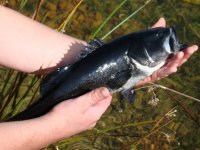
Caught this bass a while ago and was wondering if
- Thread starter braailegend
- Start date
braailegend
Senior Member
Thanks, next on the list, a albino bass.. haha
This is actually very interesting. I would put my money on the fact that this is a genetic pigmentation alteration and not the normal variance you see within bass colours, like Ryan said. It is very possible that many more bass actually produce offspring with such dark pigmentation. These bass would however have a hard time making it to a size where predators such as darters ext wouldn’t be able to target them (it doesn’t have the “normal†bass colours that enable them to camouflage). Being as black as it is this specimen would probably have some behavioural thermoregulation advantages (black absorbs sunlight better) above normal colour bass.
The dam in which the fish was caught is relatively young and thus the x-amount of bass that was put into the dam had X-amount of genetic variation between the species. What is referred to as the bottleneck affect may have taken place? Basically what happens is when only a few bass are in the dam the recessive genes may get expressed in the offspring (in other words this colour that you don’t see often in bass is now shown). This is why one should always ensure that when you stock new dams do it with specimens from different dams (and why you don’t marry your cousin). That’s enough of a genetics lesson...
The dam in which the fish was caught is relatively young and thus the x-amount of bass that was put into the dam had X-amount of genetic variation between the species. What is referred to as the bottleneck affect may have taken place? Basically what happens is when only a few bass are in the dam the recessive genes may get expressed in the offspring (in other words this colour that you don’t see often in bass is now shown). This is why one should always ensure that when you stock new dams do it with specimens from different dams (and why you don’t marry your cousin). That’s enough of a genetics lesson...
Little Green Fish
Sealiner
Ryan wrote:
 !!!!
Ouch, but just remember then it's called RE-VOLUTION, in more than one wayKeep it in the family - Evolution
!!!!Herman Nel
Senior Member
Hi guys!
I have also caught a "black " bass ,at Driekoppies,and my boat partner lost a bigger one,also pitch black like this one!
We fished 15-25 ft deep CLEAR water.
I beleive the water clarity has an influence on fish colours due to UV exposure / sunlight penetration. ( in short a "tan")
Bass also have the "cameleon" effect,the ability to change colours in order to hide/protect themselves. It is possible that bass feel safer in black than cammo?
I remember reading an article many moons ago of a bloke who also caught a "black" bass, but this fish was blind due to some worm/parasite infection. That bass "saw" black/nothing and maby went black for protection?
In spawn time male Bluekurpers also turn black like this,maybe bass copy them to get closer to kurper nests?
Or maybe it is the genes....
Attachments

.Generaal.
New member
braailegend, have you seen any other black ones? the water looks pretty clear and you should be able to spot these from a mile away.
Herman Nel
Senior Member

Herman Nel
Senior Member

Herman Nel
Senior Member

Yes Herman your right bass do show a remarkable array of colours to camoflage in different conditions. What made me think that this is a genetic alteration is the fact that it is such a small pond and the other bass he caught was "normal" in colour. I guess one can only speculate on what caused this bass to be as black as it is. Off the topic but those fish you posted are some real lunkers!
braailegend wrote:
It looks stunning in black, I was fishing in the Po river in Italy once and the bass there are also black like this.
FA
Caught this bass a while ago and was wondering if this is a normal colour deviation for a bass... "Googled" it and could not find any bass this black. Maybe the experts know on sealine know more than google..
It looks stunning in black, I was fishing in the Po river in Italy once and the bass there are also black like this.
FA

braailegend
Senior Member
The only thing I noticed, most of the black bass, was dark green, but this one was Black, with no green or yellow what so ever, only other colour on it was the white belly.
I have to agree with DJP, that it is a genetic thing, because bass of similar size in the pond is normal colour. Herman's post also looks very interesting, think a Biology student can write a thesis on how water affects the colour of a bass… Note to anyone looking for a topic for research... while enjoying some fishing:fishn
Saw the fish again, this weekend and was still black, so don't think its a temporary thing.
Little Green Fish
Sealiner
Water clarity most definately has an effect or the colour of the residing bass (other species too) the clearer the wtare the more contrast and more vibrant the colours, if the water is stained there's no need to belnd into the surroundings as when the water is clear hence the often almost albino look, I was fortunate to see fingerlings released once and when they were in the 25lt buckets (white in colour) they had almost lost all the characteristic patterns and colours. They got released and withing a matter of 3-5 minutes all of them had changed their patterns (this was in clear water) and those that did not , well didn't have the chance as they stood out from their surroundings and got attacked with viroustity unlike the normal stalk and strike.
In my humble opinion the Black one is colour that way due to a genetic disorder and is not the norm otherwise there would be way more reports and pics of these, location could also play a huge part especially considering water composition wrt toxcins, radical elements and other minerals that are predominant in that specific water system.
In my humble opinion the Black one is colour that way due to a genetic disorder and is not the norm otherwise there would be way more reports and pics of these, location could also play a huge part especially considering water composition wrt toxcins, radical elements and other minerals that are predominant in that specific water system.
